
Project illustration; identifying client material is withheld.
A matter-centred workspace for independent solicitors
Legal-practice workspace
Independent solicitors often run their practice across a mixture of email, file storage, task lists, calendars, time trackers, invoicing tools, and separate compliance services. Each tool may work on its own, but the gaps between them create repeated administration and make it harder to see the complete state of a case.
I designed and built a responsive legal-practice platform that brought that work into one connected workspace. I was the sole developer across the product, from its organising model and role-aware experiences to the day-to-day workflows inside them.
The matter at the centre
The central product decision was to organise the system around the legal matter. Opening a matter brought its client information, files, messages, tasks, notes, calendar activity, time entries, and invoices into a shared context.
That model reflected the way solicitors already think about their work. Instead of remembering which separate tool held the latest document or whether a time entry belonged to the correct client, users could begin with the matter and move through everything connected to it.
The wider product still provided practice-level views—for example, tasks across several matters or all unbilled time—but those views referred back to the same underlying records. This kept the product coherent as its scope expanded.
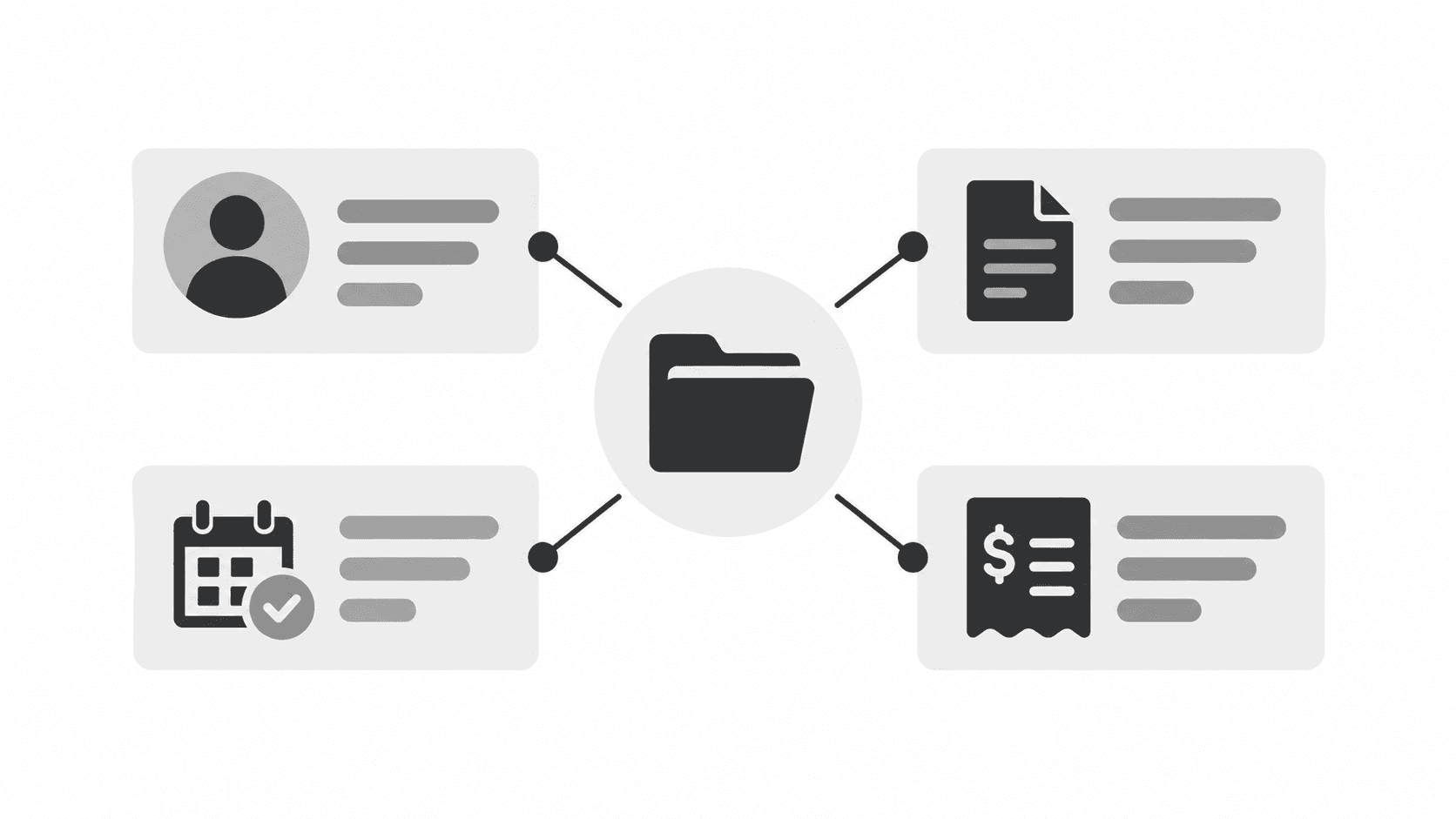
Client details, documents, tasks, and billing remained connected through the same underlying legal matter.
From enquiry to completed work
The product covered more than active case management. Solicitors could receive enquiries, prepare quotes, and turn accepted work into an active matter without losing the surrounding context.
Once work began, the same workspace supported documents, secure communication, tasks, notes, time recording, billing, calendar events, and business-verification checks. Time entries remained attached to the matter and could flow into invoicing, creating a clearer path from work completed to work billed.
Designing for several roles
Solicitors, clients, and administrators needed different levels of access to the same product. I built role-aware workspaces so that each user could reach the information and actions appropriate to them without exposing the complexity of the entire system.
The interface was responsive across desktop and smaller screens. The goal was not to compress a large-firm practice-management product into a browser; it was to give independent professionals a focused system that could support their whole practice without feeling unnecessarily heavy.
Where the product reached
The platform progressed beyond a design exercise into a working product. It opened for registration and solicitors have signed up to it.
The strongest outcome is the product architecture itself: a broad set of legal, operational, and financial workflows made understandable through one durable organising principle.
The client identity, original screens, and identifying technical details have been withheld.
Have a project in mind?
Send me the brief, rough notes, or problem you are trying to solve.
More examples

Payroll data reconciliation
A large-scale payroll reconciliation project that uncovered undocumented record revisions, repaired high-confidence mismatches, and tested the reliability of data across several payroll models.
Workforce services

Contact data migration and synchronisation
A migration and ongoing integration that transformed 40,000 to 50,000 employment-based CRM records into deduplicated person-level contacts for a multichannel customer-service platform.
Customer operations