
Project illustration; identifying client material is withheld.
Matching missed callers to customer records before offering a written support channel
Missed-call follow-up automation
A missed call is a simple operational event, but it can leave both sides waiting. The caller does not know when somebody will respond, while the service team has another callback to work through.
The organisation wanted to test whether some of those conversations could continue immediately in writing. Its telephone system provided API access and call events, so I connected a missed-call event to an automatic follow-up message and added the measurement needed to judge whether the idea actually worked.
Matching the caller before sending
When the telephone system reported a missed incoming call, the integration took the originating number and compared it with the phone numbers held on customer records.
The workflow continued only when it found a reliable match. Unknown or unmatched numbers did not receive an automatic follow-up, so the service was not sending messages indiscriminately to everybody who called the line.
The matched record also made the response more useful. Where a usable name was available, the message could address the caller personally, acknowledge that their call had been missed, and offer a quicker written route into the service team through text or WhatsApp. The exact wording could be controlled by the business rather than being embedded permanently in the telephone system.
This turned a manual service step into a targeted, repeatable response that happened while the caller's reason for getting in touch was still current.
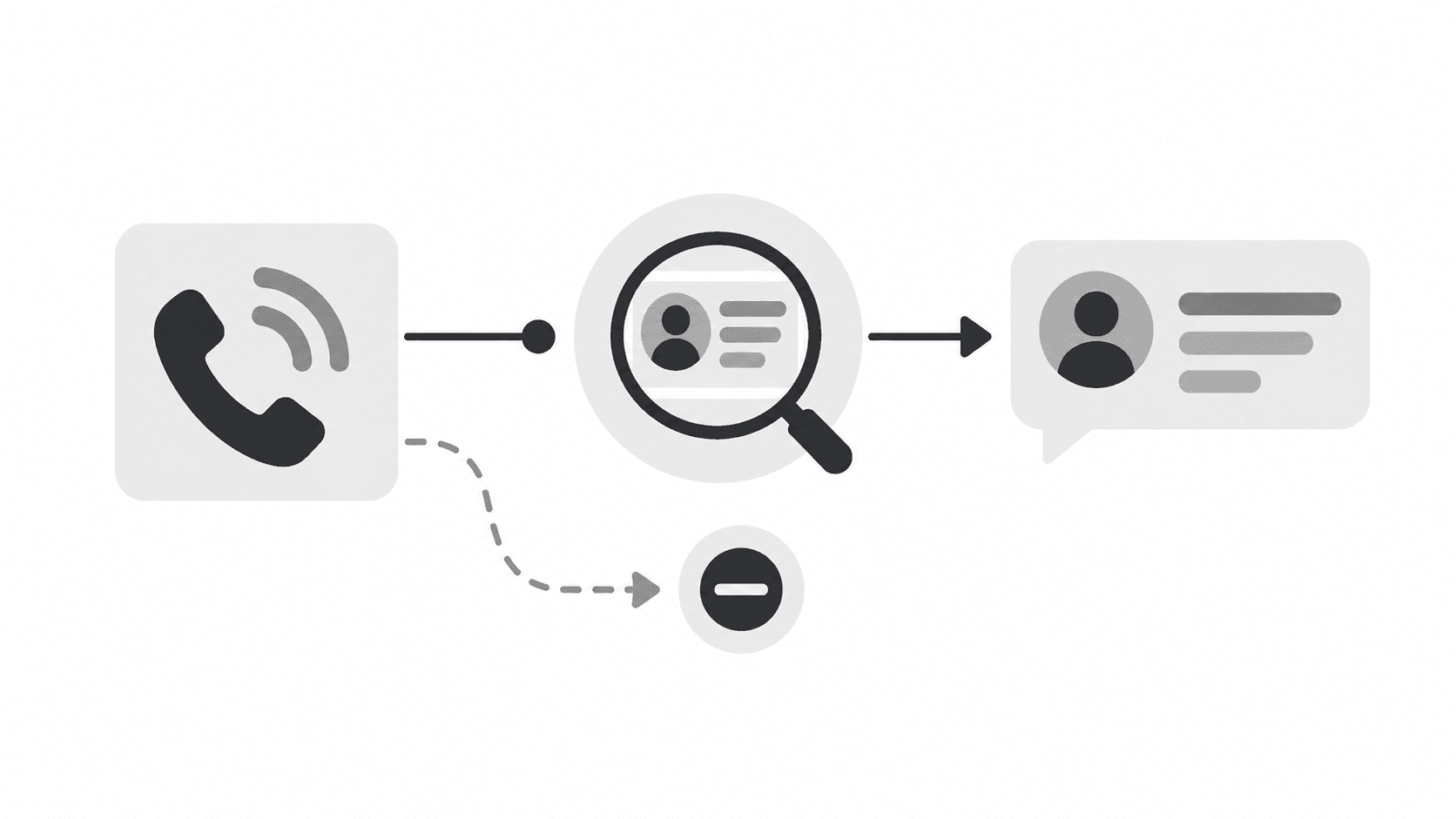
Only callers matched reliably to an existing customer record continued to the personalised follow-up message.
Measuring the customer journey
Sending the message was only half of the work. The business also needed to know whether callers used the alternative channel and whether those conversations reached a resolution.
I added tracking around the experiment so the team could compare the number of missed-call follow-ups with the number of callers who continued by message. That made the intervention measurable rather than leaving the organisation to infer success from isolated anecdotes.
A useful negative result
Uptake was low. Relatively few missed callers chose to continue through the suggested written channel.
That did not make the project a technical failure. The automation performed the intended action and the measurement provided a clear answer about customer behaviour. The organisation could assess the idea using evidence, change the message or journey if it wanted to test another version, or avoid further investment in an approach that customers were not choosing.
The outcome
The project connected a live operational event to customer-record matching, a personalised response, and visible results. It combined telephone-system events, customer data, messaging, and service analytics in a small, defined piece of automation.
The broader value was disciplined experimentation. Instead of building an unmeasured process and assuming it helped, the business gained the tools to see what customers actually did and make the next decision accordingly.
The organisation, telephone provider, messaging provider, message wording, and identifying implementation details have been withheld.
Have a project in mind?
Send me the brief, rough notes, or problem you are trying to solve.
More examples

Payroll data reconciliation
A large-scale payroll reconciliation project that uncovered undocumented record revisions, repaired high-confidence mismatches, and tested the reliability of data across several payroll models.
Workforce services

Contact data migration and synchronisation
A migration and ongoing integration that transformed 40,000 to 50,000 employment-based CRM records into deduplicated person-level contacts for a multichannel customer-service platform.
Customer operations