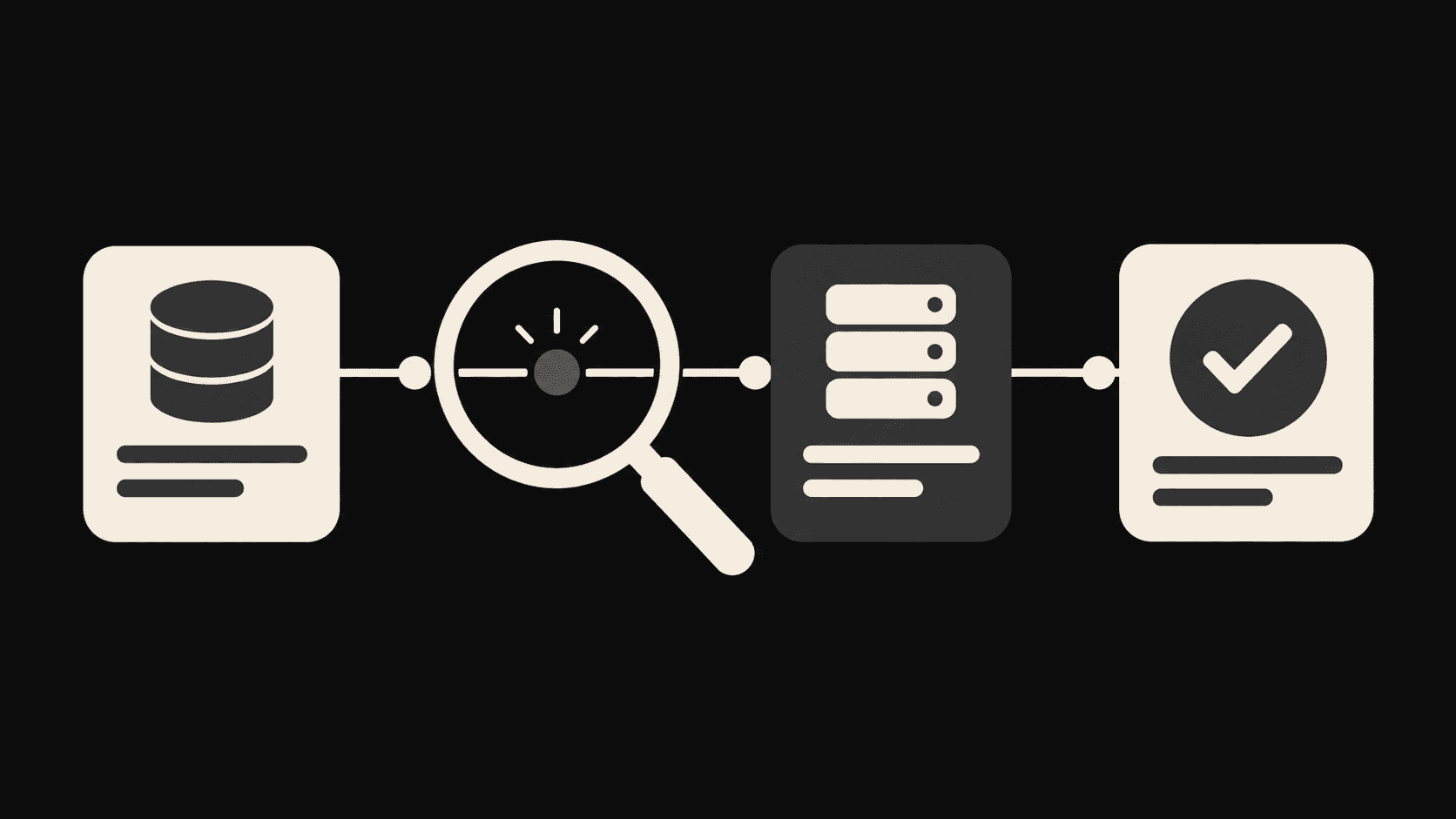
Project illustration; identifying client material is withheld.
Turning unclear operational queries into verified fixes across connected systems
Cross-system issue resolution
An operational query rarely arrives as a clean technical problem. It normally begins with a short message: somebody cannot access an account, a record is missing information, or the status shown in one place does not match what the team expects.
I investigated a series of these queries by following the evidence through customer-service correspondence, CRM records, application data, integrations, and the underlying code. Each investigation began with an individual issue, but the useful outcome was finding the precise point where the systems had diverged and deciding whether the right response was a data correction, a software change, or both.
Three queries, three different causes
In one case, an account appeared to exist correctly but the person could not complete registration. Comparing the records across the CRM and application database exposed a small difference in the contact details held by each system. The values looked equivalent to a person, but they did not satisfy the application's exact matching rules.
Another query concerned records created through the application that were arriving in the CRM without an operationally important field. I traced the creation path from the application through the integration, checked the CRM field definition, and confirmed that the value was never being included in the outgoing payload. The fix belonged in the integration rather than in another manual process for the service team.
A third case involved an account displaying the wrong service status. The current information existed, but an older active record was taking precedence in the application's selection logic. Following the status through the CRM, database, incoming data, and code made it possible to separate the visible symptom from the rule that caused it.
Establishing the source of truth
The difficult part was not retrieving a value from a database. It was deciding which system and which record should be trusted when several plausible answers existed.
I compared identifiers, contact details, timestamps, record states, and integration payloads rather than assuming that the first matching result was current. Where the application behaviour remained unclear, I followed the data into the code that selected, transformed, or displayed it.
This created an evidence chain from the original query to the underlying cause. It also made the eventual explanation useful to both technical and nontechnical colleagues: what had happened, why it had happened, and what needed to change.
Fixing the cause, not only the record
Some incidents could be resolved safely by correcting a record. Others exposed repeatable gaps in validation, integration mapping, or application logic.
I treated those as different kinds of work. Data corrections addressed the immediate case, while code and integration changes prevented the same condition from producing another query later. Where the evidence was incomplete, I stopped short of an automatic change and made the uncertainty explicit.
That distinction matters in technical operations. A fast answer is useful, but a fast answer that quietly leaves the same defect in place only moves the work to the next person who encounters it.
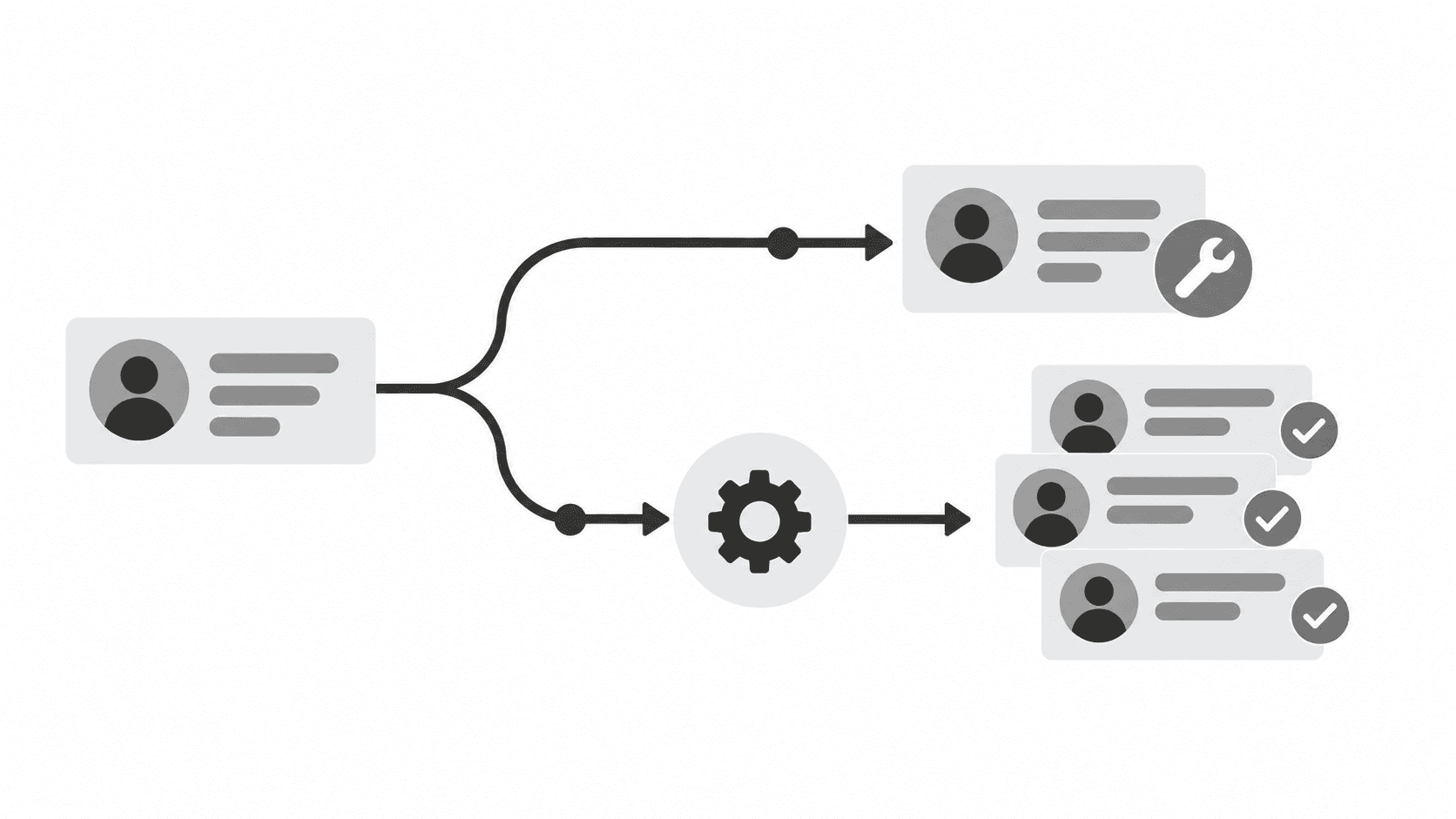
A record correction resolved the immediate case; a system or integration change prevented the same fault affecting future records.
Working with appropriate access
These investigations did not require unrestricted access to every company system. They required permissioned access to the evidence relevant to the query, enough context to understand how the systems connected, and clear boundaries around any change.
I worked from the specific records involved, verified conclusions across more than one source where possible, and separated investigation from mutation. This kept the work focused while still allowing a problem to be followed across departmental and technical boundaries.
The outcome
Individual queries were answered with a verified explanation rather than a guess or a handoff. More importantly, the investigations surfaced repeatable failure modes that could be corrected in the software and integrations behind the service.
The broader value was a practical link between customer service and engineering. Operational questions became useful diagnostic signals, and technical investigation turned those signals into clearer data, more dependable system behaviour, and fewer opportunities for the same issue to recur.
The organisation, individuals, correspondence, records, and identifying implementation details have been withheld.
Have a project in mind?
Send me the brief, rough notes, or problem you are trying to solve.
More examples

Payroll data reconciliation
A large-scale payroll reconciliation project that uncovered undocumented record revisions, repaired high-confidence mismatches, and tested the reliability of data across several payroll models.
Workforce services

Contact data migration and synchronisation
A migration and ongoing integration that transformed 40,000 to 50,000 employment-based CRM records into deduplicated person-level contacts for a multichannel customer-service platform.
Customer operations